Chapter 12 of the DMCA states that "no person shall circumvent a technological measure that effectively controls access to a work protected under this title." While originally meant to restrict the ability of a user to copy and distributed protected works, this clause has had far reaching consequences which ranges from trampling on the fair use doctrine to being interpreted as including works that were clearly not meant to be covered.
For example, under the DMCA, purchasing music (or licensing it... which will probably be the subject of a later post) wrapped in DRM (Digital Rights Management) means that you are not allowed to try to circumvent the DRM. While we all realize that there should be some way of preventing a purchaser of a music file from distributing it across the internet for free, it goes against intuition (and fair use rights!) that the music I purchase can only be played on my computer and not a portable media player, or worse, that I'm unable to play it on both my iPod and my Zune, depending on if it's wrapped in Apple's FairPlay DRM or Microsoft's PlayForSure DRM. However, the DMCA makes it illegal for me to circumvent the DRM technology to make it interoperable with all of my devices... hmmm, where's the sense in that? Fortunately we've pretty much made the transition away from DRM on music files, but we still have this problem with our video files.
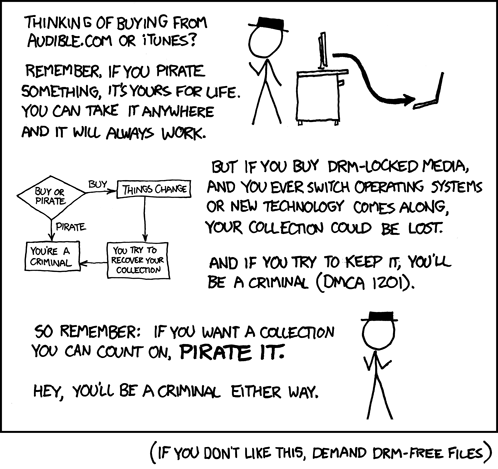
Hollywood has used the CSS (Content Scrambling System) in order to protect DVDs from being copied. While free programs exist which allow users to circumvent the CSS in order to make the content of the DVD interoperable with other media players, it is illegal under the DMCA to even own such software, much less use it.
Many big companies claim that any reverse engineering of their software is a violation of the DMCA. Apple claims that it is a violation to jailbreak an iPhone because the firmware is copyrighted. Companies are now claiming that authentication routines fall under the DMCA restriction for circumvention. Lexmark uses authentication routines to hinder aftermarket vendors from selling their own, cheaper, toner cartridges. Even garage door makers have filed suits against each other claiming that it is a DMCA violation to bypass the authentication protocol. These claims are absolutely absurd and are nothing more than an abuse of a law which was originally meant to protect copyrighted works, which now serves to foster monopolies and anti-competitive business business practices.
This is just a small bit of my opinion regarding the DMCA. Bottom line - courts keep upholding ridiculous DMCA claims which infringe on fair use rights and competition - it's a slippery slope until we're locked into mini-monopolies, with any company we try to purchase things from claiming that, due to the DMCA circumvention clause, they are the only ones who can manufacture products which work with their own products. Imagine a world where big oil can purchase car manufacturers - if Shell purchased Honda, and added some technology to the car and a little bit of spice to the fuel, so that Hondas could only run on Shell gasoline, and it would be illegal to try to circumvent the technology to make your car compatible with Exxon gas. Unfortunately, given the courts rulings so far, it's could very easily happen.

No comments:
Post a Comment